A paper got accepted!

We are thrilled to announce that our conference paper entitled “Detecting Phishing on Shared-Domain Hosting Services Using LLM-Based Contextual Mismatch Reasoning” has been accepted for publication in The 21st International Conference on Availability, Reliability and Security (ARES 2026). Congratulations to Inuzuka-kun and kudos to the entire team!

In this work, we propose an LLM-based phishing detection workflow tailored to shared-domain hosting services (SHSs) such as free website builders, where benign and malicious pages coexist under the same provider-managed domain and conventional URL- and domain-based features break down. Our three-stage pipeline — Brand Analyzer, Content Analyzer, and Judge — reasons about the contextual mismatch between the brand a page claims to represent and the sensitive actions it prompts. Evaluated across ten SHSs with both commercial (GPT-4.1-mini) and open-source (Qwen3-8B) models, our system achieves high recall, outperforms state-of-the-art baselines including FreePhish and PhishLLM, and provides natural-language rationales that explain each verdict.

Sho Inuzuka, Takaaki Toda, Daiki Chiba, and Tatsuya Mori, "Detecting Phishing on Shared-Domain Hosting Services Using LLM-Based Contextual Mismatch Reasoning." In Proc. of The 21st International Conference on Availability, Reliability and Security (ARES 2026), Linköping, Sweden, Aug 2026.

A paper got accepted!

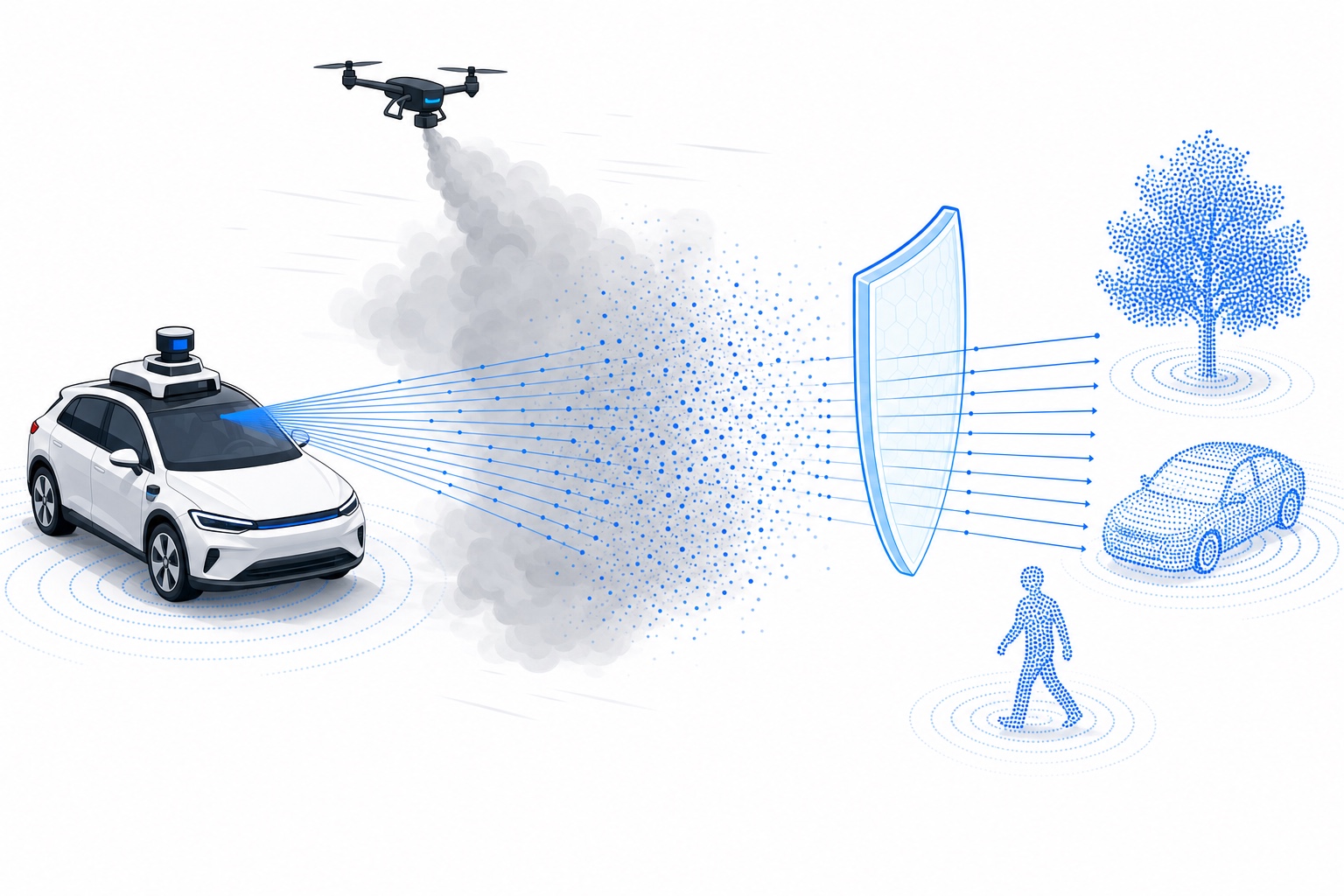
We are thrilled to announce that our journal paper entitled “Comprehensive Evaluation and Defense against Adversarial Fog Attacks on LiDAR-Based Autonomous Driving” has been accepted for publication in the Journal of Information Processing (JIP). Congratulations to Tanaka-kun and kudos to the entire team!

This paper is an extended journal version of our ACM AsiaCCS 2025 paper. In this work, we present a comprehensive evaluation of Adversarial Fog Attacks (AFA), which exploit vulnerabilities of point cloud preprocessing filters in LiDAR-based autonomous driving. We systematically analyze how environmental and attack parameters affect the attack effectiveness, physically validate the attack across multiple LiDAR models, and investigate post-detection avoidance behaviors together with practical defense strategies. The paper has been published in Vol. 34, pp. 748–774 (September 2026) and is available on J-STAGE.

Yuna Tanaka, Kazuki Nomoto, Ryunosuke Kobayashi, Go Tsuruoka, and Tatsuya Mori, "Comprehensive Evaluation and Defense against Adversarial Fog Attacks on LiDAR-Based Autonomous Driving." Journal of Information Processing, Vol. 34, pp. 748–774, Sep 2026. [J-STAGE]

情報通信功績賞を受賞

本研究室の主宰者である森が、令和8年度「電波の日・情報通信月間」における表彰において、情報通信月間推進協議会会長表彰(情報通信功績賞)を受賞いたしました。

「高度人材の育成、AIセキュリティ政策の推進に尽力し、我が国の安全・安心なサイバー空間の実現に多大な貢献をした」ことを評価いただいたものです。表彰対象は個人ですが、日頃から一緒に研究・教育に取り組んでくれている学生の皆さん、共同研究者の皆様、そして関係コミュニティの皆様のご支援あっての受賞と考えています。ここに感謝いたします。

SCIS2026論文賞を受賞

森研究室の戸田宇亮君と森による論文「セキュリティ用オープンLLMエージェントシステムのエンジニアリングガイド」が、2026年暗号と情報セキュリティシンポジウム(SCIS2026)において SCIS論文賞 を受賞しました。おめでとうございます!表彰式は SCIS2027(2027年1月)の会期中に行われる予定です。

戸田 宇亮, 森 達哉, 「セキュリティ用オープンLLMエージェントシステムのエンジニアリングガイド」, 2026年暗号と情報セキュリティシンポジウム(SCIS2026), 3G3-1, 2026年1月.

A paper got accepted!

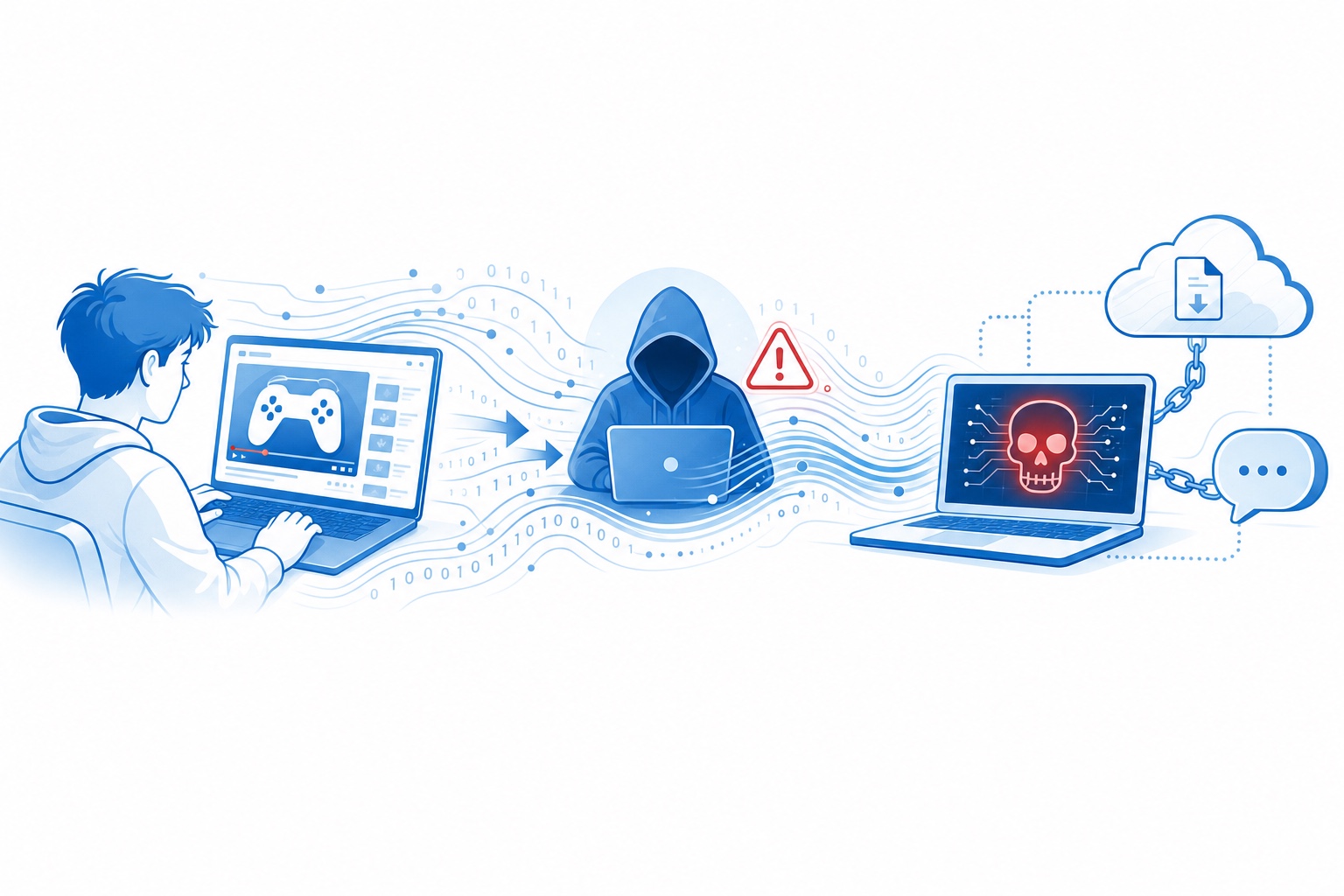
We are thrilled to announce that our workshop paper entitled “Large-Scale Analysis of Malware Distribution via Fake Game Cheats and Cracked Software on YouTube” has been accepted for publication in the 5th Workshop on Attackers and Cyber-Crime Operations (WACCO 2026), co-located with IEEE EuroS&P 2026. Congratulations Yamagishi-kun!

In this work, we present VIPER (VIdeo Platform Exploitation Reconnaissance), an automated system that continuously monitors YouTube for malware distribution campaigns masquerading as game cheats or cracked software—a class of threat we term VidCrackBait. VIPER iteratively updates its search queries to track evolving attack patterns and harvests video metadata via the YouTube Data API v3. Over five months, VIPER collected 104,974 videos from 38,855 unique channels, identifying 6,976 distinct fully qualified domain names embedded in descriptions and comments. Our analysis reveals that attackers target popular competitive games with recurring title/description/thumbnail patterns, and we identify 396 intermediate YouTube channels that post no content but serve as persistent relay nodes—forming multi-stage redirection chains that link YouTube to messaging platforms, file-hosting services, and social media.

Rei Yamagishi, Shota Fujii, and Tatsuya Mori, "Large-Scale Analysis of Malware Distribution via Fake Game Cheats and Cracked Software on YouTube." In Proc. of the 5th Workshop on Attackers and Cyber-Crime Operations (WACCO 2026), co-located with IEEE EuroS&P 2026, Venice, Italy, Jun 2026.